 |
|
|
|
|
|
Politics
> Iran Does It Her Way
|
|
New Topic |
Post Reply
|
<< |
1 |
>>
| 1. Friday, September 1, 2006 10:04 AM |
| nuart |
Iran Does It Her Way |
Member Since
12/18/2005
Posts:7632
View Profile
Send PM
|
Yada yada, Ahmadinejad smiled. He asked the President of the United States, "Would you like to debate? I think it would be fun." Rumsfeld was provacative in a speech and even praised the theocracy promoting homophobic organization known as the Boy Scouts but that didn't get as much play as his calling all Democrats Nazi appeasers and all Muslims Fascists. They're still spying on us! They want to know WHO we're calling and WHAT we're saying! Yada, yada, yada, the nuclear enrichment program goes forward. Kim Jung Il watches, I'm sure. I'm getting a hair cut today. Yada, yada, yada. What was that sound? Oh, it was just a whimper. Bang. Susan
“Half a truth is often a great lie.” Ben Franklin
|
| 2. Wednesday, September 6, 2006 10:42 AM |
| nuart |
RE: Iran Does It Her Way |
Member Since
12/18/2005
Posts:7632
View Profile
Send PM
|
So yeah, I did get a hair cut last week. It was as heavy as a blanket and with these 100+ temps lately, it is a relief to have some of it gone. But here I was reading a review of INLAND EMPIRE (with the conceit of all caps, natch) when I happened onto this article also from the Times of Oman, not a bookmarked news outlet for me. Sigh. Ahmadinejad is a relatively powerless mouthpiece for the mullahs and the rising in power Republican Guard military industrial complex within Iran. Are they terrorists? Are they are part of the War on Terror? Yes, to the first, yes to the second question too. Though I still think a reframing of what it is we are fighting and what we will likely be fightlng for some time to come is in order. I'm for making a list and then seeing what they have in common. At that point, let's come up with a name for the war. Gumdrops? Susan | Times of Oman - International News | | (Wednesday, September 06, 2006) |
| | Ahmadinejad hits back at 'nothing' Bush after Qaeda jibe |
| TEHRAN –– President Mahmoud Ahmadinejad on Wednesday hit back at George W. Bush after he compared Iranian leaders to Al-Qaeda, saying the US president was "nothing" compared to the will of God.
"I am telling him (Bush) that all the world is threatening you since the general path that the world is taking is towards worshipping God and divinity," Ahmadinejad said in a fiercely religious speech.
"This massive stream is moving and you are nothing in comparison to God's will,"
Bush had on Tuesday stepped up his war of words against the Islamic republic and Ahmadinejad, saying Iran's leaders were "tyrants" as dangerous as Al-Qaeda, who must not be allowed to obtain nuclear weapons.
The US president vowed that "America will not bow down to tyrants", recalling that Ahmadinejad had vowed last month that the United States must "bow down" before Iran.
"The president of one of these countries has used my words as a pretext and said I am threatening him," Ahmadinejad retorted. An official close to Ahmadinejad told AFP that the president "wanted to respond directly to Bush's speech", even if he studiously avoided using the US president's name, instead addressing him simply as "you".
The pugnacious verbal sparring came as the United States pushes for UN Security Council sanctions to be imposed on Iran over its nuclear programme, which Washington contests is cover for nuclear weapons development.
Iran maintains that its nuclear work is a he told a conference ahead of a major festival on Saturday marking the birth of the "hidden" 12th Shiite Imam Mahdi. purely peaceful drive intended at supplying energy to the country's growing population. "Your problem is that you think that your nuclear and chemical weapons can keep you in power. This kind of thinking is the root of all prejudices and wars," Ahmadinejad said
"What deceives the people and spreads injustice and that the US and Britain want to keep themselves in control all over the world. Those who do not respond to our call of reasoning and logic will not have a good fate," he warned.
Ahmadinejad also reaffirmed his offer, already rejected by the White House, of a live TV debate with Bush to discuss the world's problems. –– AFP |
“Half a truth is often a great lie.” Ben Franklin
|
| 3. Wednesday, September 6, 2006 4:23 PM |
| danwhy |
RE: Iran Does It Her Way |
Member Since
12/18/2005
Posts:1923
View Profile
Send PM
|
George Friedman's latest on Iraq (which also has a lot to do with Iran specifically): Iraq: The Policy DilemmaBy George Friedman
U.S. President George W. Bush now has made it clear what his policy on Iraq will be for the immediate future, certainly until Election Day: He does not intend to change U.S. policy in any fundamental way. U.S. troops will continue to be deployed in Iraq, they will continue to carry out counterinsurgency operations, and they will continue to train Iraqi troops to eventually take over the operations. It is difficult to imagine that Bush believes there will be any military solution to the situation in Iraq; therefore, we must try to understand his reasoning in maintaining this position. Certainly, it is not simply a political decision. Opinion in the United States has turned against the war, and drawing down U.S. forces and abandoning combat operations would appear to be the politically expedient move. Thus, if it is not politics driving him -- and assuming that the more lurid theories on the Internet concerning Bush's motivations are as silly as they appear -- then we have to figure out what he is doing.
Let's consider the military situation first. Bush has said that there is no civil war in Iraq. This is in large measure a semantic debate. In our view, it would be inaccurate to call what is going on a "civil war" simply because that term implies a degree of coherence that simply does not exist. Calling it a free-for-all would be more accurate. It is not simply a conflict of Shi'i versus Sunni. The Sunnis and Shia are fighting each other, and all of them are fighting American forces. It is not altogether clear what the Americans are supposed to be doing.
Counterinsurgency is unlike other warfare. In other warfare, the goal is to defeat an enemy army, and civilian casualties as a result of military operations are expected and acceptable. With counterinsurgency operations in populated areas, however, the goal is to distinguish the insurgents from civilians and destroy them, with minimal civilian casualties. Counterinsurgency in populated areas is more akin to police operations than to military operations; U.S. troops are simultaneously engaging an enemy force while trying to protect the population from both that force and U.S. operations. Add to this the fact that the population is frequently friendly to the insurgents and hostile to the Americans, and the difficulty of the undertaking becomes clear.
Consider the following numbers. The New York Police Department (excluding transit and park police) counts one policeman for every 216 residents. In Iraq, there is one U.S. soldier (not counting other coalition troops) per about 185 people. Thus, numerically speaking, U.S. forces are in a mildly better position than New York City cops -- but then, except for occasional Saturday nights, New York cops are not facing anything like the U.S. military is facing in Iraq. Given that the United States is facing not one enemy but a series of enemy organizations -- many fighting each other as well as the Americans -- and that the American goal is to defeat these while defending the populace, it is obvious even from these very simplistic numbers that the U.S. force simply isn't there to impose a settlement.
Expectations and a Deal Unwound
A military solution to the U.S. dilemma has not been in the cards for several years. The purpose of military operations was to set the stage for political negotiations. But the Americans had entered Iraq with certain expectations. For one thing, they had believed they would simply be embraced by Iraq's Shiite population. They also had expected the Sunnis to submit to what appeared to be overwhelming political force. What happened was very different. First, the Shia welcomed the fall of Saddam Hussein, but they hardly embraced the Americans -- they sought instead to translate the U.S. victory over Hussein into a Shiite government. Second, the Sunnis, in view of the U.S.-Shiite coalition and the dismemberment of the Sunni-dominated Iraqi Army, saw that they were about to be squeezed out of the political system and potentially crushed by the Shia. They saw an insurgency -- which had been planned by Hussein -- as their only hope of forcing a redefinition of Iraqi politics. The Americans realized that their expectations had not been realistic.
Thus, the Americans went through a series of political cycles. First, they sided with the Shia as they sought to find their balance militarily facing the Sunnis. When they felt they had traction against the Sunnis, following the capture of Hussein -- and fearing Shiite hegemony -- they shifted toward a position between Sunnis and Shia. As military operations were waged in the background, complex repositioning occurred on all sides, with the Americans trying to hold the swing position between Sunnis and Shia.
The process of creating a government for Iraq was encapsulated in this multi-sided maneuvering. By spring 2006, the Sunnis appeared to have committed themselves to the political process. And in June, with the death of Abu Musab al-Zarqawi and the announcement that the United States would reduce its force in Iraq by two brigades, the stage seemed to be set for a political resolution that would create a Shiite-dominated coalition that included Sunnis and Kurds. It appeared to be a done deal -- and then the deal completely collapsed.
The first sign of the collapse was a sudden outbreak of fighting among Shia in the Basra region. We assumed that this was political positioning among Shiite factions as they prepared for a political settlement. Then Abdel Aziz al-Hakim, the head of the Supreme Council for Islamic Revolution in Iraq (SCIRI), traveled to Tehran, and Muqtada al-Sadr's Mehdi Army commenced an offensive. Shiite death squads struck out at Sunni populations, and Sunni insurgents struck back. From nearly having a political accommodation, the situation in Iraq fell completely apart.
The key was Iran. The Iranians had always wanted an Iraqi satellite state, as protection against another Iraq-Iran war. That was a basic national security concept for them. In order to have this, the Iranians needed an overwhelmingly Shiite-dominated government in Baghdad, and to have overwhelming control of the Shia. It seemed to us that there could be a Shiite-dominated government but not an overwhelmingly Shiite government. In other words, Iraq could be neutral toward, but not a satellite of, Iran. In our view, Iraq's leading Shia -- fearing a civil war and also being wary of domination by Iran -- would accept this settlement.
We may have been correct on the sentiment of leading Shia, but we were wrong about Iran's intentions. Tehran did not see a neutral Iraq as being either in Iran's interests or necessary. Clearly, the Iranians did not trust a neutral Iraq still under American occupation to remain neutral. Second -- and this is the most important -- they saw the Americans as militarily weak and incapable of either containing a civil war in Iraq or of taking significant military action against Iran. In other words, the Iranians didn't like the deal they had been offered, they felt that they could do better, and they felt that the time had come to strike.
A Two-Pronged Offensive
When we look back through Iranian eyes, we can now see what they saw: a golden opportunity to deal the United States a blow, redefine the geopolitics of the Persian Gulf and reposition the Shia in the Muslim world. Iran had, for example, been revivifying Hezbollah in Lebanon for several months. We had seen this as a routine response to the withdrawal of Syrian troops from Lebanon. It is now apparent, however, that it was part of a two-pronged offensive.
First, in Iraq, the Iranians encouraged a variety of factions to both resist the newly formed government and to strike out against the Sunnis. This created an uncontainable cycle of violence that rendered the Iraqi government impotent and the Americans irrelevant. The tempo of operations was now in the hands of those Shiite groups among which the Iranians had extensive influence -- and this included some of the leading Shiite parties, such as SCIRI.
Second, in Lebanon, Iran encouraged Hezbollah to launch an offensive. There is debate over whether the Israelis or Hezbollah ignited the conflict in Lebanon. Part of this is ideological gibberish, but part of it concerns intention. It is clear that Hezbollah was fully deployed for combat. Its positions were manned in the south, and its rockets were ready. The capture of two Israeli soldiers was intended to trigger Israeli airstrikes, which were as predictable as sunrise, and Hezbollah was ready to fire on Haifa. Once Haifa was hit, Israel floundered in trying to deploy troops (the Golani and Givati brigades were in the south, near Gaza). This would not have been the case if the Israelis had planned for war with Hezbollah. Now, this discussion has nothing to do with who to blame for what. It has everything to do with the fact that Hezbollah was ready to fight, triggered the fight, and came out ahead because it wasn't defeated.
The end result is that, suddenly, the Iranians held the whip hand in Iraq, had dealt Israel a psychological blow, had repositioned themselves in the Muslim world and had generally redefined the dynamics of the region. Moreover, they had moved to the threshold of redefining the geopolitics to the Persian Gulf.
This was by far their most important achievement.
A New Look at the Region
At this point, except for the United States, Iran has by far the most powerful military force in the Persian Gulf. This has nothing to do with its nuclear capability, which is still years away from realization. Its ground forces are simply more numerous and more capable than all the forces of the Arabian Peninsula combined. There is another aspect to this: The countries of the Arabian Peninsula are governed by Sunnis, but many are home to substantial Shiite populations as well. Between the Iranian military and the possibility of unrest among Shia in the region, the situation in Saudi Arabia and the rest of the Peninsula is uneasy, to say the least. The rise of Hezbollah well might psychologically empower the generally quiescent Shia to become more assertive. This is one of the reasons that the Saudis were so angry at Hezbollah, and why they now are so anxious over events in Iraq.
If Iraq were to break into three regions, the southern region would be Shiite -- and the Iranians clearly believe that they could dominate southern Iraq. This not only would give them control of the Basra oil fields, but also would theoretically open the road to Kuwait and Saudi Arabia. From a strictly military point of view, and not including the Shiite insurgencies at all, Iran could move far down the western littoral of the Persian Gulf if American forces were absent. Put another way, there would be a possibility that the Iranians could seize control of the bulk of the region's oil reserves. They could do the same thing if Iraq were to be united as an Iranian satellite, but that would be far more difficult to achieve and would require active U.S. cooperation in withdrawing.
We can now see why Bush cannot begin withdrawing forces. If he did that, the entire region would destabilize. The countries of the Arabian Peninsula, seeing the withdrawal, would realize that the Iranians were now the dominant power. Shia in the Gulf region might act, or they might simply wait until the Americans had withdrawn and the Iranians arrived. Israel, shaken to the core by its fight with Hezbollah, would have neither the force nor the inclination to act. Therefore, the United States has little choice, from Bush's perspective, but to remain in Iraq.
The Iranians undoubtedly anticipated this response. They have planned carefully. They are therefore shifting their rhetoric somewhat to be more accommodating. They understand that to get the United States out of Iraq -- and out of Kuwait --they will have to engage in a complex set of negotiations. They will promise anything -- but in the end, they will be the largest military force in the region, and nothing else matters. Ultimately, they are counting on the Americans to be sufficiently exhausted by their experience of Iraq to rationalize their withdrawal -- leaving, as in Vietnam, a graceful interval for what follows.
Options
Iran will do everything it can, of course, to assure that the Americans are as exhausted as possible. The Iranians have no incentive to allow the chaos to wind down, until at least a political settlement with the United States is achieved. The United States cannot permit Iranian hegemony over the Persian Gulf, nor can it sustain its forces in Iraq indefinitely under these circumstances.
The United States has four choices, apart from the status quo:
1. Reach a political accommodation that cedes the status of regional hegemon to Iran, and withdraw from Iraq.
2. Withdraw forces from Iraq and maintain a presence in Kuwait and Saudi Arabia -- something the Saudis would hate but would have little choice about -- while remembering that an American military presence is highly offensive to many Muslims and was a significant factor in the rise of al Qaeda.
3. Halt counterinsurgency operations in Iraq and redeploy its forces in the south (west of Kuwait), to block any Iranian moves in the region.
4. Assume that Iran relies solely on its psychological pre-eminence to force a regional realignment and, thus, use Sunni proxies such as Saudi Arabia and Kuwait in attempts to outmaneuver Tehran.
None of these are attractive choices. Each cedes much of Iraq to Shiite and Iranian power and represents some degree of a psychological defeat for the United States, or else rests on a risky assumption. While No. 3 might be the most attractive, it would leave U.S. forces in highly exposed, dangerous and difficult-to-sustain postures.
Iran has set a clever trap, and the United States has walked into it. Rather than a functioning government in Iraq, it has chaos and a triumphant Shiite community. The Americans cannot contain the chaos, and they cannot simply withdraw. Therefore, we can understand why Bush insists on holding his position indefinitely. He has been maneuvered in such a manner that he -- or a successor -- has no real alternatives.
There is one counter to this: a massive American buildup, including a major buildup of ground forces that requires a large expansion of the Army, geared for the invasion of Iran and destruction of its military force. The idea that this could readily be done through air power has evaporated, we would think, with the Israeli air force's failure in Lebanon. An invasion of Iran would be enormously expensive, take a very long time and create a problem of occupation that would dwarf the problem faced in Iraq. But it is the other option. It would stabilize the geopolitics of the Arabian Peninsula and drain American military power for a generation.
Sometimes there are no good choices. For the United States, the options are to negotiate a settlement that is acceptable to Iran and live with the consequences, raise a massive army and invade Iran, or live in the current twilight world between Iranian hegemony and war with Iran. Bush appears to be choosing an indecisive twilight. Given the options, it is understandable why.
"We cannot allow a mine shaft gap"
|
| 4. Wednesday, September 6, 2006 9:54 PM |
| nuart |
RE: Iran Does It Her Way |
Member Since
12/18/2005
Posts:7632
View Profile
Send PM
|
This grim take concerning Iran, Shia and how it impacts the Middle East stability and by extension the entire world, seems to be spreading. Have any of you read Vali Nasr? Here's the article that shook my world. It's taken from his current book I believe. REad it and feel the frustration rise. http://www.foreignaffairs.org/20060701faessay85405/vali-nasr/when-the-shiites-rise.htmll You know how I'm always looking for new thinking smart folks. This guy fits the bill with regard to his deep understanding of the Middle East. He's cute too!
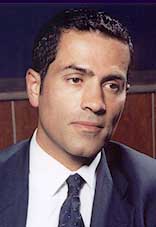
Dr. Vali R. Nasr
Status
Professor
Department
National Security Affairs
Research Interests
Politics of South Asia and the Middle East; Political Islam; Comparative Politics theory
Biography
Vali Nasr is Professor in the Department of National Security Affairs at the Naval Postgraduate School. He joined NPS in 1993 after teaching at the University of San Diego, University of California, San Diego, and Tufts University. He is the author of Democracy in Iran (Oxford University Press, 2006); The Shia Revival: How Conflicts within Islam will Shape the Future (W.W. Norton, 2006); The Islamic Leviathan: Islam and the Making of State Power (Oxford University Press, 2001); Mawdudi and the Making of Islamic Revivalism (Oxford University Press, 1996); The Vanguard of the Islamic Revolution: The Jama`at-i Islami of Pakistan (University of California Press, 1994); editor, Muslim World, Special Issue on South Asian Islam, 87:3 (July-October 1997); an editor of Oxford Dictionary of Islam (Oxford University Press, 2003); and co-editor with S.H. Nasr and Hamid Dabashi of Expectation of the Millennium: Shi`ism in History (SUNY Press, 1989).
His works on Political Islam and Comparative Politics of South Asia and the Middle East has been published in Comparative Politics, Asian Survey, Middle East Journal, International Journal of Middle East Studies, Middle east Policy, Political Science Quarterly, Survival, Journal of Democracy, Georgetown Journal of International Affairs, SAIS Review, The Fletcher Forum of World Affairs, Modern Asian Studies, Studies in Contemporary Islam, Cahiers d’Etudes sur la Mediterranee Orientale et le Monde Turco-Iranien, International Review of Comparative Public Policy, Harvard International Review, International Journal of Politics, Culture and Society, Contention, Middle Eastern Studies, The Muslim World, World & I, as well as numerous edited volumes on the Middle East, South Asia, Political Islam and Comparative Politics.
He has contributed to Oxford Encyclopedia of Modern Islam, The Encyclopedia of Politics and Religion, and The Encyclopedia of Politics and Religion. He has written for The New York Times and the Washington Post, and has provided expert commentary to media, notably, CNN, BBC, National Public radio, Public Radio International, New Hour with Jim Lehrer, CBS News and CBS 60 Minutes, and NBC Nightly News. His works have been translated into Arabic, Indonesian, Turkish, Persian, Chinese, and Urdu. Dr. Nasr has been the recipient of grants from the John D. and Catherine T. MacArthur Foundation, The Harry Frank Guggenheim Foundation, Social Science Research Council, and the American Institute of Pakistan Studies.
Dr. Nasr teaches courses on Comparative Politics, International Political Economy, South Asia Iran and Political Islam. Dr. Nasr earned his degrees from the Massachusetts Institute of Technology (Ph.D., 1991), the Fletcher School of Law and Diplomacy (MALD, 1984), and Tufts University (BA, 1983).
Bush is not the only one without a solution. I'm glad George Friedman recognizes that. The Iranians know they are holding most of the cards. A bad situation. In the best of all fantasy worlds, how can this be best resolved? Susan
“Half a truth is often a great lie.” Ben Franklin
|
| 5. Wednesday, September 6, 2006 10:28 PM |
| JVSCant |
RE: Iran Does It Her Way |
Member Since
12/18/2005
Posts:2870
View Profile
Send PM
|
Page one of his article was very interesting. I'm going to return soon to read the rest...
 
|
| 6. Wednesday, September 13, 2006 12:32 PM |
| nuart |
RE: Iran Does It Her Way |
Member Since
12/18/2005
Posts:7632
View Profile
Send PM
|
Here's an interesting writer. She blogs from Iran. I only discovered her today but have bookmarked her site which is included on the Time magazine website. I wonder how her views stack up with the majority of Iranians. Such a mysterious country... Susan 

Sunday, Sep. 3, 2006
Living Under The Cloud
As Iran's leaders raise the stakes, many people are already feeling the pain
By AZADEH MOAVENI / TEHRAN The early risers in my neighborhood arrived at the local bakery one recent morning to find the doors locked and the stone oven cold. They milled about for a while and then began speculating about why the bakery should mysteriously be shut. Before long, they settled on an explanation: the Iranian government had sent all the country's flour to Lebanon. Since the war in Lebanon ended last month, Iranians have become convinced that their government is spending outrageous sums on Lebanon's Shi'ites to shore up support for Iran's longtime client Hizballah. The rumors grow more outlandish every day: the Lebanese are receiving free SUVs or plasma televisions. As shop owner Behjat Karimi, 47, put it, "What else of ours are they going to give away next?" The bakery, it turns out, was merely closed for remodeling. But a general sense of suspicion still hangs in the air, and Tehran probably can't ignore it. To the outside world, the Iranian government projects an image of national resolve as it defies U.N. Security Council demands to stop enriching uranium. But the regime's ability to withstand international pressure may depend on how forgiving Iranians are about the sluggish economy. The rate of inflation is at least 19%, and unemployment has edged up to 15%. At a press conference last week, President Mahmoud Ahmadinejad fended off criticism of his economic program by swinging attention to foreign policy and calling for a debate with President George W. Bush. Some former Iranian officials and other analysts speculate that Ahmadinejad is stoking the nuclear crisis with the West in part to divert attention from the economy. "This is the first government in years to make big economic promises to people," says a close associate of Ahmadinejad's with knowledge of his government's thinking. "If it fails to deliver, it will be a catastrophe not just for this administration but for the entire regime." The war in Lebanon has provoked economic anxieties. Nightly news broadcasts that Iranians watch on their illegal satellite dishes show Hizballah doling out thick stacks of cash to displaced Shi'ites, courtesy of Iran. Because President Ahmadinejad enjoys pandering to public sentiment in the Arab world, the flow of Iranian resources to Lebanon is no secret. But this spending on a faraway Arab community infuriates Iranians and revives an ugly Persian chauvinism that considers Arabs uncultured and backward. One story I heard last week has the wife of Hizballah leader Sheik Hassan Nasrallah receiving a gift of Iranian caviar and thinking it was some sort of jam. The discontent is rising. At a recent dinner party, all my guests rattled off fresh complaints about the government's misplaced priorities: a businessman who legally imports foreign goods says the government hasn't stopped the influx of smuggled products; a musician couple can't find affordable housing in Tehran; an English teacher at a government-run language institute complains of the school's harsh new dress code. "Instead of caring about our coat lengths, maybe [Ahmadinejad] should pay attention to what counts," says Farah, 32, the teacher. For now, the Establishment doesn't seem threatened by people's grievances. But moderates are worried that a serious confrontation with the U.S., possibly involving military strikes, would provoke a legitimacy crisis for the regime. All of which suggests that Iran may defy the West over its nuclear program for as long as it can manage, and adapt at the last minute to avoid a military clash. Until then, even the threat of sanctions could prove useful by offering Iran's President an external source of blame for the nation's economic problems. Iranians seem resigned to the likelihood that with tensions rising, the situation at home is likely to get worse. Earlier last month, police confiscated all the illegal satellite dishes in my neighborhood under the guise of preventing the broadcast of impure content. The "real" story circulating among residents went like this: a regime official had recently begun importing small, laptop-size satellite dishes that work indoors. If the government rounded up the rooftop dishes, everyone would be forced to buy the official's dishes. For a while, people on my block stood outside debating what to do. The elders finally shook their heads in dejection while their children traded ringtones on their mobile phones.
“Half a truth is often a great lie.” Ben Franklin
|
|
New Topic |
Post Reply
|
Page 1 of 1 ::
<< |
1 |
>>
|
|
Politics
> Iran Does It Her Way
|
| Users viewing this Topic (0) |
| |
Powered by JorkelBB 2006 (Version 1.0b)
|
|
|


